

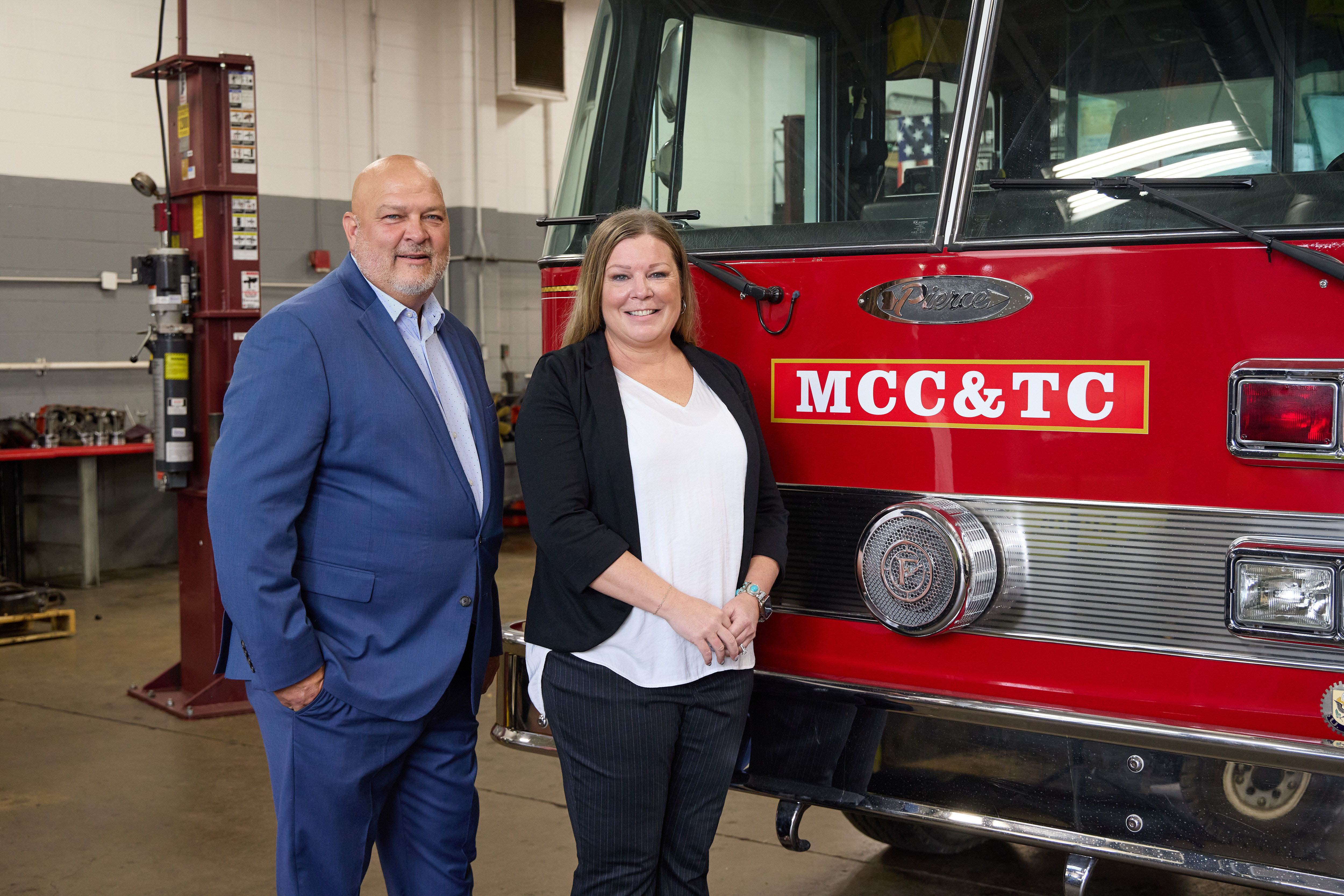
In an era when AI threatens to reshape every job on the planet, one Ohio institution proves that the future belongs to those who can both make things and think critically about how to make them better.
The conference room at Mahoning County Career and Technical Center (MCCTC) buzzes with an energy that belies its location in the heart of Ohio's Rust Belt. Today, it's hosting the Mahoning Valley Manufacturers Coalition—not in some gleaming corporate tower, but right here, where
the students are. As Superintendent John Zehentbauer puts it with characteristic directness: “They go where the students are.”
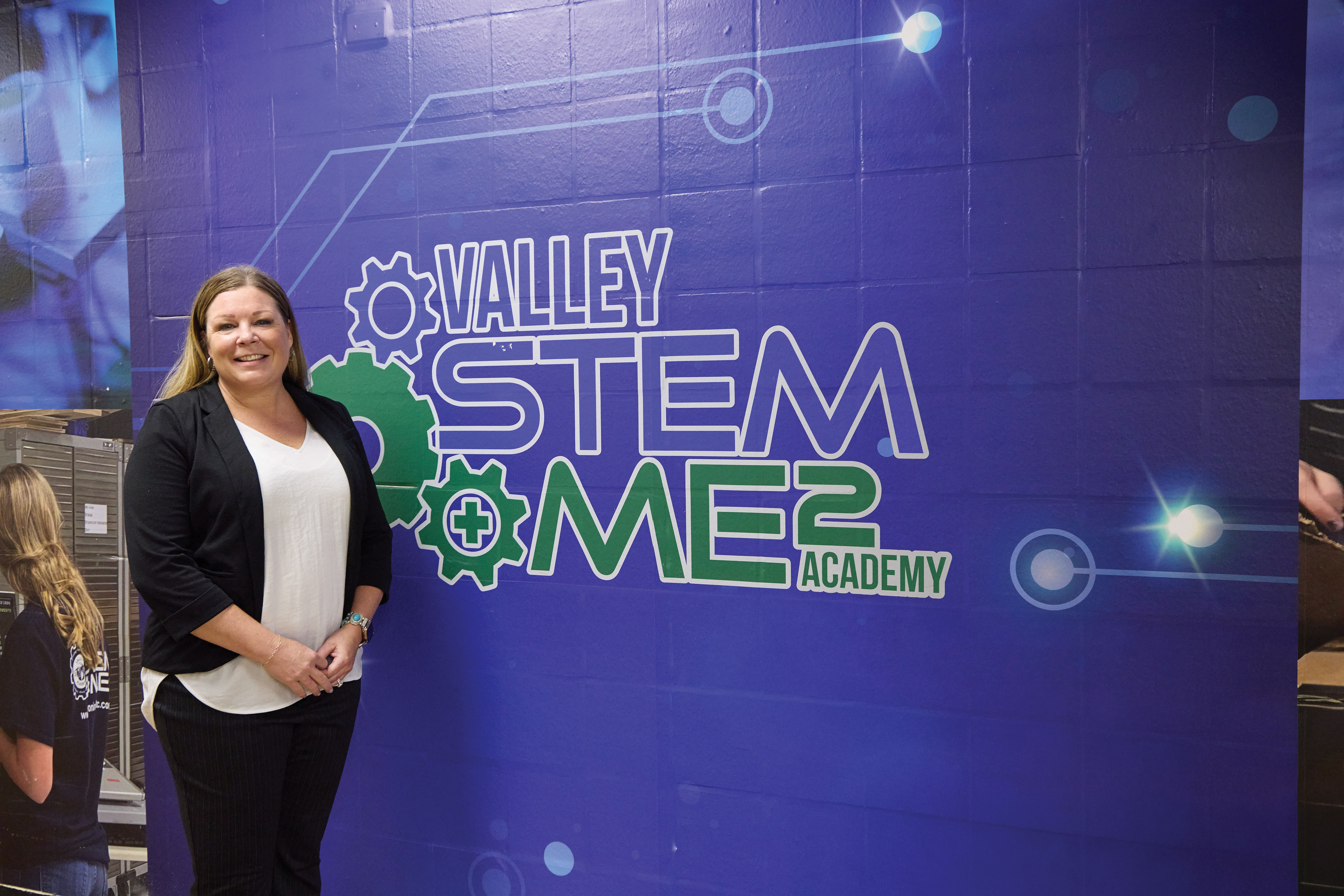
It's a small detail that speaks volumes about a seismic shift in American education. Career technical centers, once wrongly stigmatized as being for students who “couldn't cut it” in traditional classrooms, have become the vanguard of preparing America's workforce for a rapidly evolving economy. And MCCTC, under the leadership of Zehentbauer and Dr. Mara Banfield, Director of MCCTC and Superintendent of The Valley STEM Academy, stands at the forefront of this transformation.
The Great Pendulum Swing 
The transformation didn't happen overnight. In the 1970s, when the Mahoning Valley's steel mills were still roaring, career centers were packed with students transitioning from heavy industry to skilled trades. But the 1980s and '90s brought what Zehentbauer describes as a dramatic shift—a “college-for-all” mentality that saw career technical education enrollment plummet as society embraced a 75-25 split: 75% of jobs supposedly requiring college degrees, only 25% requiring hands-on skills.
The unfounded stigma was real and pervasive. Career and technical education was sometimes viewed as second choice, a Plan B for underachieving students rather than a legitimate pathway to success. Parents across America internalized the message that their children needed four-year degrees to have any hope of prosperous futures.
But around 2012-2013, the tide began to turn. The terminology itself evolved—from “vocational education” to “career technical education”— reflecting a broader reimagining of what these programs could offer. The new vision emphasized what Zehentbauer calls “the big three”: enroll in college, employ, or enlist in the military. Students could pursue any path, but they'd leave high school with valuable credentials regardless.
The real acceleration, though, came after 2015, and especially following the COVID-19 pandemic.
When the World Stood Still—And Learned a Lesson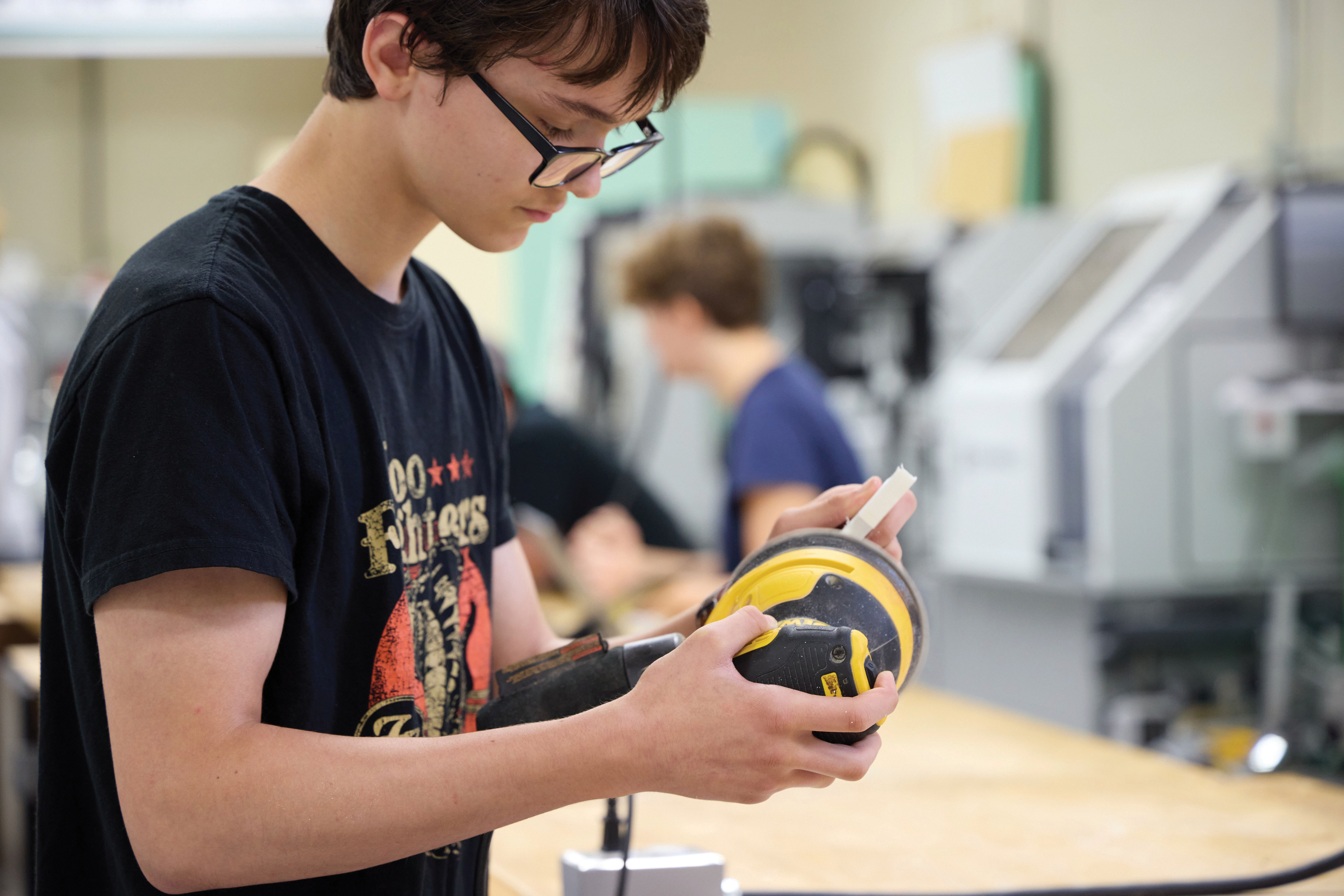
The pandemic exposed America's dangerous over-reliance on foreign manufacturing. When 98% of global supply chains ground to a halt and the U.S. found itself desperately dependent on China for everything from personal protective equipment to pharmaceutical ingredients, the strategic folly became impossible to ignore. The reshoring movement that had been slowly building suddenly became urgent national policy, with manufacturing job announcements from reshored operations and foreign direct investment jumping to record highs.
Dr. Banfield observed the shift in real-time. Students began recognizing that many industries—healthcare, manufacturing and other essential services never stopped during the pandemic. A new value proposition emerged. How quickly can I start earning? How much debt will I accumulate? This generation, she notes, is “becoming wiser in terms of thinking ahead and not wanting to go in debt.”
The numbers tell the story. Approximately 50% of students who start four-year degrees never finish them, often leaving with crushing student debt and no credential. Meanwhile, MCCTC's students can complete programs that leave them with industry-recognized credentials and zero debt.
Building the Future, One Oven at a Time 
What sets MCCTC apart isn't just adapting to change—it's anticipating it. Walk through their facilities and you'll find state-of-the-art equipment that mirrors what students will encounter in the workforce. Zehentbauer's example is telling. The center just purchased two new “Rational Ovens” for their culinary program, each costing nearly $30,000. These aren't just fancy kitchen appliances—they're AI-enabled systems that can simultaneously smoke a brisket and sear a steak to perfection, each at precise temperatures.
“His skill as a chef and understanding all those nuances,” Zehentbauer explains, matters enormously. But when that student graduates and walks into a modern commercial kitchen, they'll already know how to operate the advanced equipment increasingly common in the industry. “How valuable is that?”
This philosophy extends across all 22 programs MCCTC offers. The center serves roughly 800 students in grades 11-12, with another 220 in the Valley STEM program for 9th and 10th graders, plus 70-100 full-time adult learners and thousands more in specialized courses through the Ohio Technical Center.
The AI Question: Integration Over Isolation
But perhaps nowhere is MCCTC's forward-thinking approach more evident than in how they've tackled artificial intelligence. While other institutions debated whether to offer AI courses, Zehentbauer and Dr. Banfield made a more fundamental decision. Integrate AI across every program.
Their timing was prescient. Just days ago, Walmart CEO Doug McMillon—leader of America's largest private employer—declared that “it's very clear that AI is going to change literally every job.” He added: “Maybe there's a job in the world that AI won't change, but I haven't thought of it.”
“We had a lot of discussion over it,” Zehentbauer recalls. Rather than creating an AI specialty class, they hired a technology integrator whose role is to help build AI applications across all industries represented at the center. Whether it's precision manufacturing, healthcare, or cosmetology, students learn how AI applies to their specific field.
The approach acknowledges a crucial truth: AI won't replace skilled workers, but workers who understand how to leverage AI will replace those who don't. As Dr. Banfield puts it: “AI is not going to replace them. But, the people that know how to use AI are the ones who will take the jobs.”
 Building Community Through Collaboration
MCCTC doesn't operate in isolation. Through the Lake to River consortium, five career centers (Ashtabula, Columbiana, Mahoning, (Choffin) and Trumbull) along with Youngstown State University function almost as a single unit. They share employers, coordinate programming, and collectively pursue grants—like a recent career pathways grant aimed at bringing hands-on technical education back to middle schools.
“It used to be, well, that's our area, that's your area,” Zehentbauer explains. “And now we've all said, listen, we all agree there's got to be middle school programming. We've got to bring shop class back to middle school.”
This collaborative spirit extends to partnerships with local universities and businesses. The center maintains strong relationships with Youngstown State, Kent State, and other regional institutions, ensuring pathways for students who want to combine technical credentials with traditional degrees.
Curriculum Built by Industry, For Industry
Dr. Banfield's approach to curriculum development breaks from traditional educational models. With training in conventional curriculum design, she recognized early that career technical education requires different thinking. “You have to go to the employers and have them say, here's what we want you guys to teach. Here's the skills we're looking for. Here's the training we're looking for.”
All of MCCTC's career tech teachers come from industry—they're experts in their fields first, educators second. The goal is preparing students not just for today's jobs, but for careers that might not even exist yet.
The Numbers Game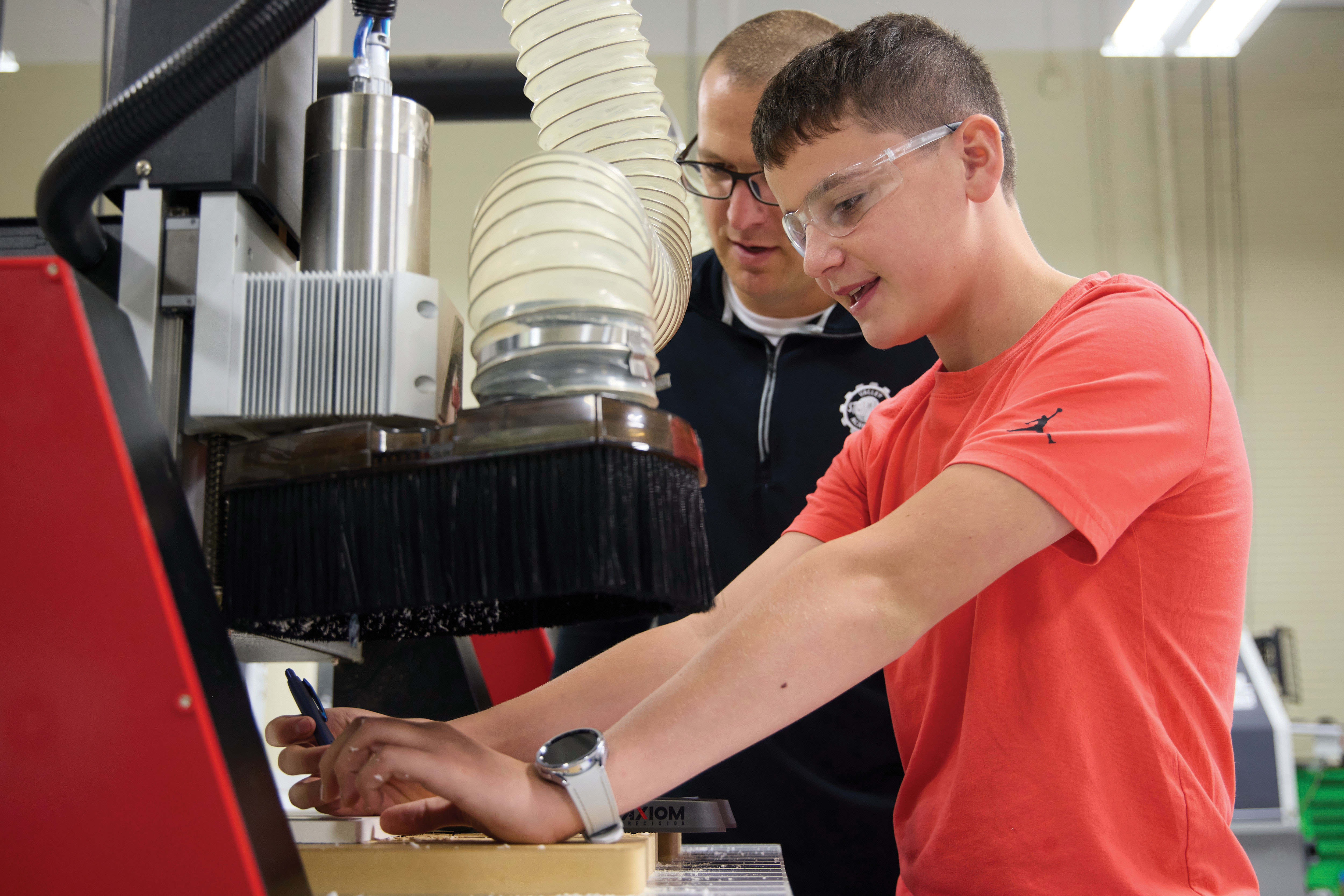
The demand speaks for itself. MCCTC operates with waiting lists. They can't accommodate everyone who wants to enroll because career technical education has become, for many students, the first choice rather than a fallback. The students who do get in consistently show higher graduation rates—93% for Career Technical Education (CTE) students nationally compared to 82% for non-CTE students.
And the economic outcomes? CTE concentrators show lower unemployment and higher full-time employment compared to non-concentrators, with more CTE graduates earning over $45,000 annually.
Looking Forward
When you listen to John Zehentbauer and Dr. Banfield speak there's a palpable sense of mission. They're not just running a school, they're helping rebuild American manufacturing capacity, one student at a time. They're proving that hands-on technical skills and cutting-edge technology aren't opposites but complements.
The chef with AI-enabled ovens. The machinist programming CNC equipment with the latest software. The healthcare worker using advanced diagnostic tools. These are the jobs America needs filled, and MCCTC is filling them.
In a world where even Walmart expects AI to touch every job while maintaining a flat headcount by shifting workforce composition, the value proposition is clear, combine technical expertise with adaptability, hands-on skills with technological fluency, and you've got workers who can't be easily replaced.
“We challenge our teachers,” Zehentbauer says. “If you're a freshman, you're not going to be in the workforce for five years, so the technology that I bring to you now better be effective in five years.”
It's a high bar. But for an institution that once unfairly carried a stigma and now stands at the cutting edge of American workforce development, it's exactly the standard required.
The manufacturers meeting next door aren't there by accident. They're there because they know where the future is being built, not in ivory towers or Silicon Valley alone, but in places like MCCTC, where students learn to weld and code, to cook and analyze data, to fix machines and work alongside AI.
They go where the students are. And increasingly, the students and America's economic future are here.
Minimizing Risk and Maximizing the Value of Taxpayer Dollars for Public Funds and Institution's
For 15 years, Mahoning County Career and Technical Center has entrusted its financial operations to Farmers National Bank—a relationship built on maximizing earnings while minimizing risk.
“We provide all of their main banking services and some of their investments,” explains Bobbi Harding, Vice President of Treasury Management and Public Sector Manager at Farmers National Bank. “We also provide the security package to protect them from fraud,” Harding states.
It's a comprehensive approach to managing public education dollars, where every cent matters and accountability is paramount.
“We value partnering with a local financial institution with the roots, stability and resources of Farmers National Bank,” says John Zehentbauer, MCCTC Superintendent. “Farmers is more than a bank to us; they are people who understand our mission and the responsibility we have to the taxpayers.”
Making Public Funds Work Harder
Beyond basic deposit services, Farmers helps MCCTC ensure taxpayer dollars generate returns rather than sitting idle. The key tool: a public funds sweep account.
“The idea is just to grow interest more substantially than a savings account,” Harding says. The sweep account automatically transfers excess funds from MCCTC's primary operating account into a higher-yield investment vehicle. A balance is targeted to stay in the primary account while the remainder goes into the sweep account and earns interest.
The results are significant. Farmers strives to provide a competitively priced sweep account with no extra fees for having it. The rate is based on Star Ohio.
The beauty of the system lies in its flexibility. Funds automatically flow between accounts as needed, allowing MCCTC to maintain working capital while maximizing returns. Says Harding: “It helps them to get a really good rate of return. It is easy as well. The core system moves funds automatically between the accounts.”
Protecting Every Dollar
With fraud attempts increasingly sophisticated, protecting public funds requires constant vigilance. Farmers provides MCCTC with a comprehensive security package covering both check and electronic transactions.
Nothing is foolproof in terms of preventing fraud, but Farmers provides powerful tools to mitigate most risk.
The system, known as Positive Pay, works by having MCCTC load information about checks they've written into the bank's platform. “As they come through, the system checks to see if the name was changed, if the amount was changed, if the date—any of that information was changed,” Harding explains. “If it is, then it will shoot out an email in the morning to the clients so that they can go in and take a look.”
The same protection extends to electronic ACH debits. If an unauthorized electronic withdrawal attempts to pull from MCCTC's account, administrators receive immediate notification and can reject it before funds are transferred. “This way, it never even hits your account,” Harding emphasizes.
For an educational institution managing millions in public funds annually, this proactive approach means the difference between security and vulnerability. And for taxpayers, it means confidence that their investment in career technical education is protected, growing, and being put to its intended use—preparing the next generation of skilled workers.