The story of RC Calf Farms, Lincolnway Beef and Yoder Family Veal is really the story of Roy Yoder, a soft-spoken and friendly Amish man in his seventies. When you engage him in conversation even for a short time, his affection for the calves under his care becomes clear. And in case you didn’t catch it, he says it outright.
“I love baby calves. I just love them,” he says, with a warm smile.
And there are plenty of them to love at RC Calf Farms. But while his feeling for the animals is evident, he wasn’t always a fan of life on the farm. His father had died when Roy was not even two years old, leaving his mother to raise him and run the farm. It was a hard life, he recalls, “and by the age of sixteen I was looking to get off the farm and do something else.”
That “something else” included working at a local feed mill and building silos. But try as he might, he couldn’t get rural life out of his blood.
“I thought I was moving on but every job ended up being farm-related,” he says, chuckling a bit.
Ultimately, he became the founder of the three-entity family business that now includes his sons—Steven, John, Dwaine and Aaron—and his daughter, Arlene Hershberger, along with members of the third generation.
RC Calf Farms 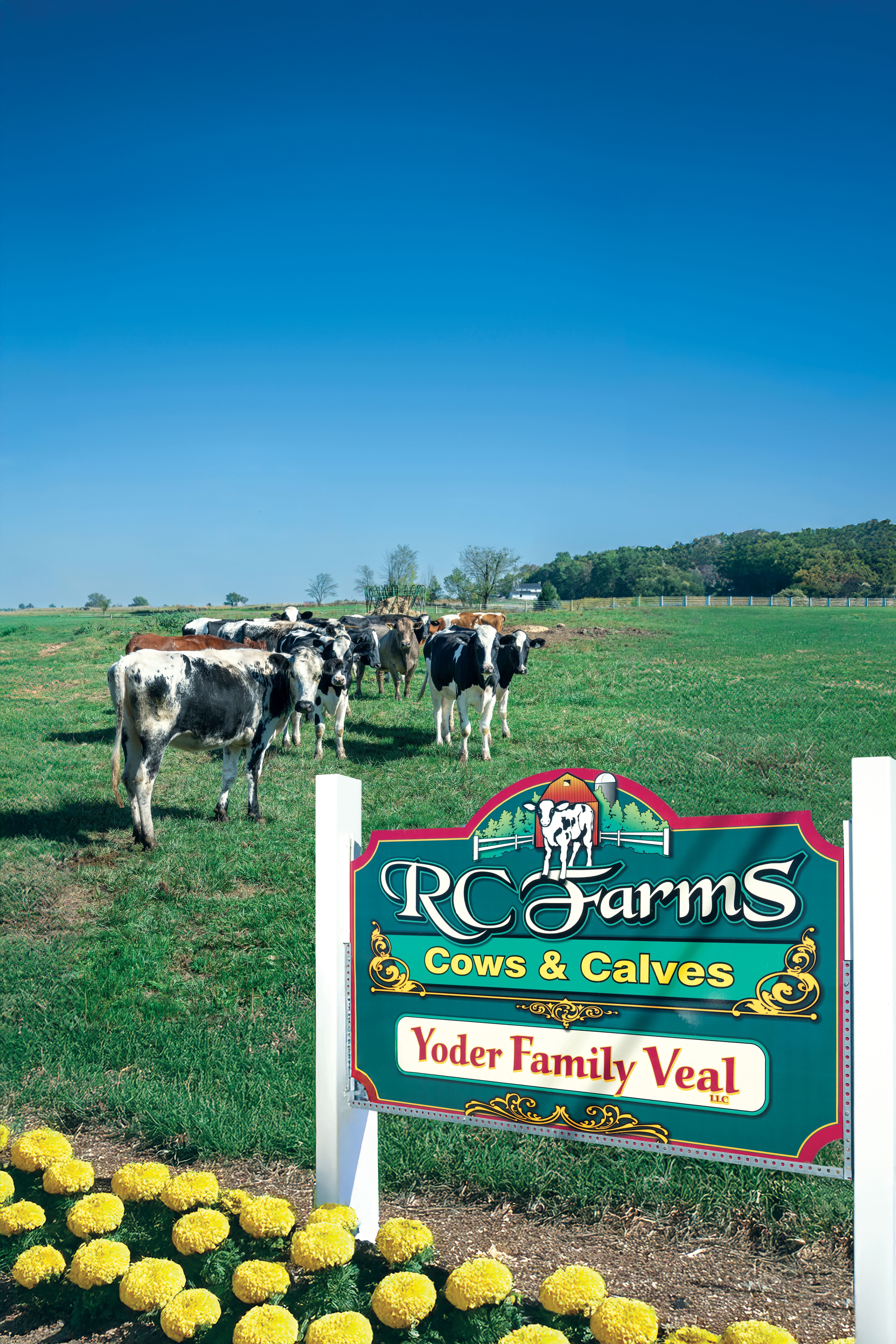
When Roy and his wife Clara married in 1977, they moved to Kidron where he started feeding veal calves. He subsequently opened RC Calf Farms in 1982, buying baby calves, raising them to 400 pounds and selling them as kosher veal calves. In 1996, however, RC Calf Farms discontinued the veal feeding and, after securing the necessary Ohio license and bonding by Packers and Stockyards, the company became strictly livestock dealers. The reason was two-fold: the supply and demand for more baby calves increased and the facility where Roy had been feeding the veal calves was sold.
“We buy the baby calves about four to six days old from local farmers, auctions, and surrounding states. They come here, we raise them and then ship them off to people as replacement calves for future milk production—what we call ‘back to the farm’ calves.”
RC Calf Farms also raises steer calves and Holstein heifers, and in 2016 began buying organic and conventional cows. Both RC Calf Farms and Yoder Family Veal are members of the Greenfield Farm Local Certified Organic Association.
The company’s market area encompasses not only Ohio but neighboring states: Pennsylvania, Indiana, Kentucky and Michigan. And while there are other farms engaged in a similar activity, Roy believes RC Calf Farms is one of the largest in the state in terms of the numbers of calves going through.
Each calf at RC Calf Farms has an 840 tag—an Animal Identification Number or AIN tag issued by the U.S. Department of Agriculture's Animal and Plant Health Inspection Service (APHIS)—that stays with that animal for its lifetime. A handheld RFID scanner inputs the information into a computer, enabling RC Calf Farms to track that calf all the way to the feedlots and beyond. This provides critical information to the government in case of an animal disease event.
“We’re the only facility in Ohio that has this kind of system, and we were chosen because of the numbers we put through,” says Roy. “And the state has been really good. They came in and set this all up for us.”
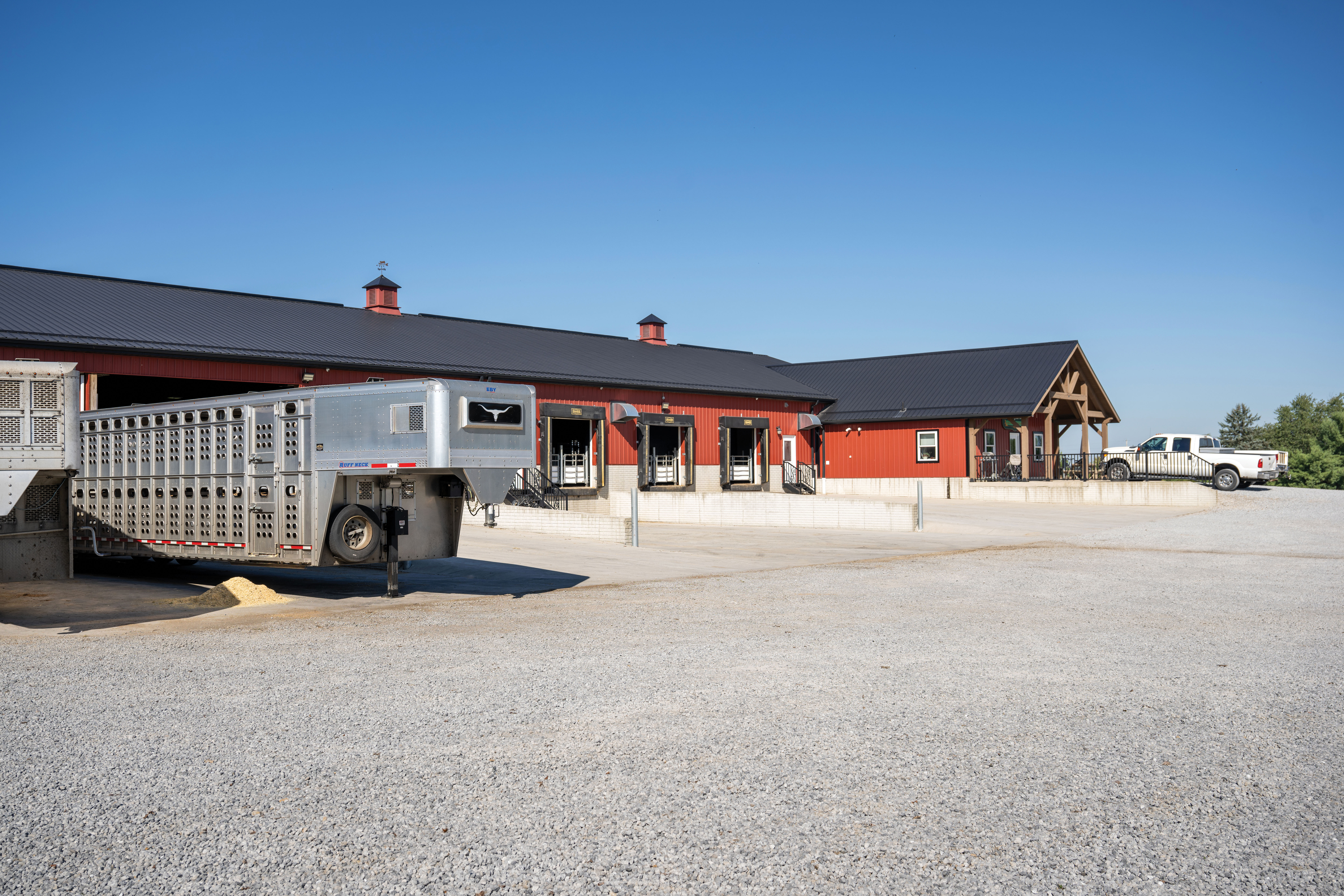
RC Calf Farms also has another claim to fame: the structure where the baby calves are housed won the 2019 Building of the Year Masters Division for livestock facilities award. The interior of the 80-by-200-foot barn is divided into 25 individual pens that can each hold up to 35 calves.
The modern barn was constructed after the business was relocated from Kidron to Steven’s 43-acre farm at 5755 Kidron Road in Apple Creek, Ohio and bigger facilities were needed for the business.
“I told the boys when we moved into this new facility I'm going to retire,” Roy recalls. Although he has turned over the management of RC Calf Farms and Lincolnway Beef to his sons, he still keeps his hand in the business by being involved with the food trailers that are part of Yoder Family Veal.
 Lincolnway Beef
A strong demand for feeder cattle—cattle weighing 300 to 500 pounds that have been conditioned and vaccinated, and are now ready to be put in the feedlot—led to the formation of the second business. In October 2023, Roy and his four sons, now partners, purchased land and facilities that were no longer being used from Yoder Livestock, and formed Lincolnway Beef located at 10084 E. Old Lincolnway in Orrville, Ohio.
“Since then, we have expanded the facilities. We put up a couple of new barns, and the truck garage is in operation where we do maintenance on trailers and trucks for customers,” Roy explains. “We have facilities in Wayne County where dairy farmers raise steers for us that we put there at 500 pounds until they're ready for market.”
Lincolnway Beef operates on a “no-contract” basis, meaning it’s open to any buyer that needs cattle at a specific weight. And, like the baby calves at RC Calf Farms, the feeder cattle are also fitted with 840 tags.
Roy is pleased with the growth of the barely two-year-old company, and while Lincolnway Beef serves the same geographic area as RC Calf Farms, it has opened their market area to customers who want a greater choice in terms of cattle weight available for sale.
Yoder Family Veal 
From calves to cattle to cream, ice cream specifically—just one of the items available from Yoder Family Veal, courtesy of its food trailers. The menu selection includes veal burgers, fish sandwiches, chicken tenders, onion rings, French fries, cold drinks and of course, homemade ice cream: vanilla, chocolate and raspberry.
The business began in the early 1980s, “and it was a small, small business when we started: a little porch grill, a table and about 50 buns,” says Roy.
Over the years, the business, located at 5317 Kidron Road in Apple Creek increased until currently, there are three food trailers, an ice cream trailer and rental coolers on wheels. “Every year we add or upgrade something,” adds Roy.
When the business started, he recalls, veal hadn’t really been introduced to a great degree into the U.S. market. He experimented with a bratwurst veal sandwich and offered samples at events, and when the response was positive, he started serving them at local auctions “and it just grew from there—from a table to a food trailer,” he says.
Now Yoder Family Veal trailers can be found not only at auctions but also at other events. And while the ice cream is made on the premises, the veal comes from Provimi Foods in Seymour, Wisconsin. “They are the only ones who make it,” he adds. “It’s seasoned but not pre-cooked. We can make 200 at a time on our grill.”
The event calendar runs from late spring into September, staying within a 10-mile radius. “We were the only food trailer for probably 25 years, but now we have about 15 competitors. But ours is the best,” he says, laughing. “Anytime I add something to my food stand, I always tell my salesman that I want the best and I have to have a niche market. You have to do something different than the rest. Nobody else has been doing veal, and my ice cream is 10% butterfat, and very rich and creamy.”
Future Plans 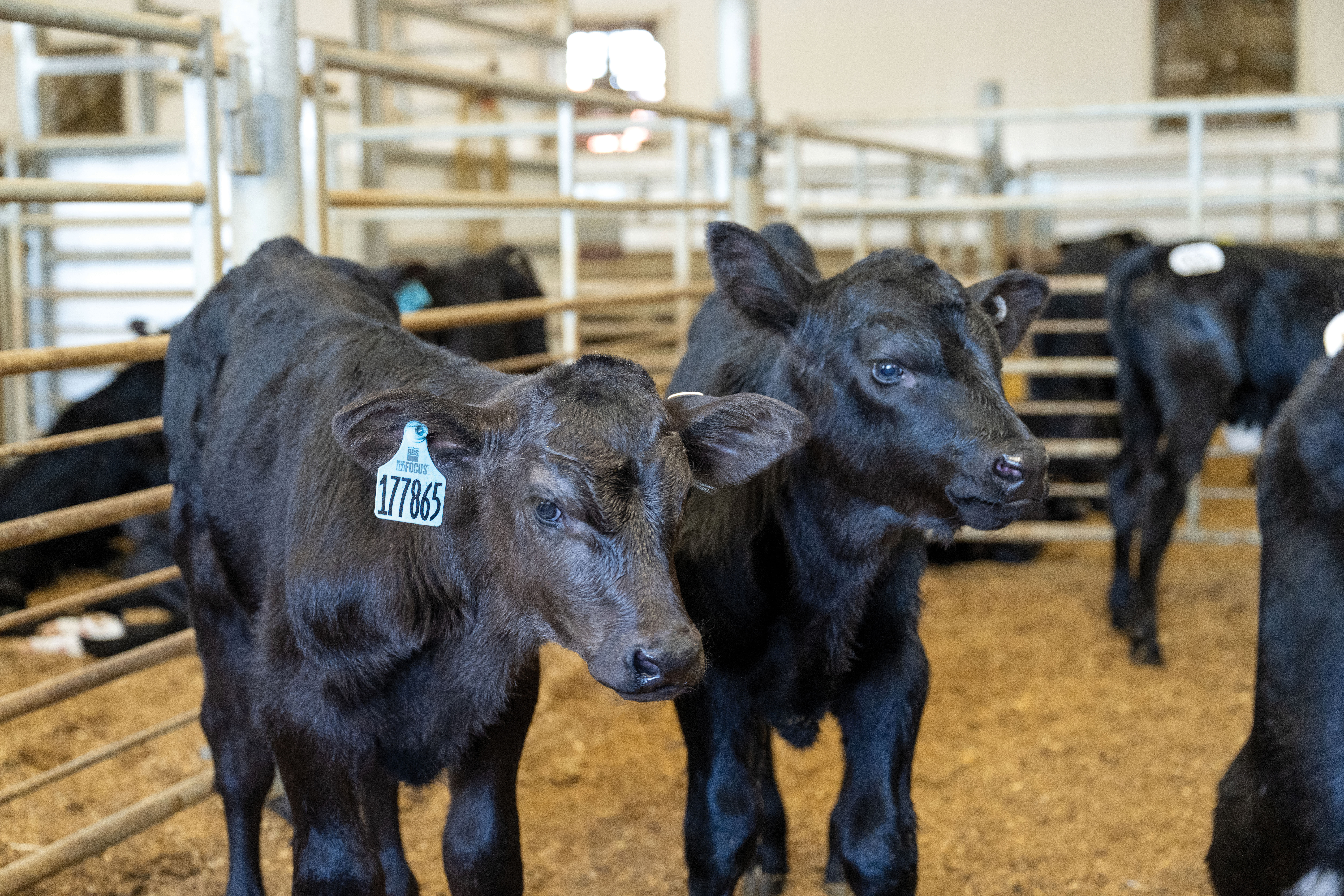
While Roy sees promising signs in the industry overall, especially in an increase in supply and demand for the calves, he also remembers times when the market would suffer a downturn.
“I've had my ups and downs in this business, don't get me wrong,” he says. “There were some tough times, times when we were committed to buy so many calves from these farmers and I had to be a salesperson and find a home for them. But right now, they actually sell themselves. So far we've been fortunate that the orders have come in. We have a tremendous repeat business,” adding “People still want beef and that’s what is keeping the market steady.”
Each member of the Yoder family has his or her area of responsibility. Steven, who came on board in 2000, is the secretary and bookkeeper, John, who joined in 2005, is the barn man, and Dwaine has been in charge of maintenance since 2015. Aaron joined the operation in 2024 and will be in charge of composting manure once that gets underway. Roy’s daughter, Arlene, helps manage Yoder Family Veal. Roy’s grandchildren are also involved in one way or another with all three businesses.
For the most part, Roy leaves decisions regarding any plans for expanding the various entities to the second generation. “Most of the decisions are made by the boys and I will just let them do whatever they want to do if it's needed and they have the financing,” he says.
And the financing end is where Farmers National Bank comes in. Roy had originally been a client of First National Bank, and then when it became part of Farmers, he continued the relationship, working with James Pittman, Vice President, Sr. Relationship Manager, Commercial Lending.
His reason for the decision? “People. Relationships. A great local guy. I would recommend that so highly to keep a local boy in the bank. Get local guys that understand our culture. That makes a big difference. Jamie understands our market. He knows cattle. That's another very important thing: to keep agriculture people in there who know and understand cattle or even feed some cattle themselves.”
Roy turned to Farmers when he wanted to purchase the land and facilities from Yoder Livestock and open Lincolnway Beef as well as for financing to construct the new building at RC Calf Farms. The bank also provides them with any other services they require.
“Right now, with the customers paying pretty promptly—within 21 days or so—we don't have a lot of borrowed money for operating,” Roy says. “But don’t get me wrong. We got to save when it’s good. I could relate back to my childhood days and what we went through on a little farm.”
Reflecting on how the individual entities have grown, Roy says “It’s amazing how over time you can grow by going in stages, starting small and growing into it.”
He attributes his success not to luck but to a commitment to keep customers happy, be honest with them and maintain the commitment that was set at the start. And, he says, “to a lot of prayers,” a not surprising comment from a man who was an ordained minister in the Amish church in 2000 and a bishop in 2017. He adds, “I think it's just great that I can still work with my whole family.”